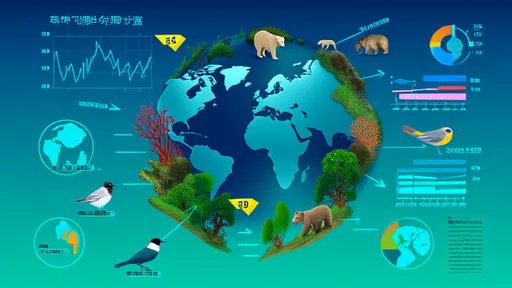
The insidious journey of microplastics through our ecosystems represents one of the most pressing and complex environmental challenges of our time. These minuscule particles, often invisible to the naked eye, have permeated every corner of the globe, from the deepest ocean trenches to the most remote mountain peaks. Their presence in the food web, however, marks a particularly alarming chapter in the story of anthropogenic pollution, raising profound questions about long-term ecological and human health consequences.
Microplastics, typically defined as plastic fragments less than five millimeters in size, originate from a myriad of sources. They are the weathered remnants of larger plastic debris, broken down by sun, wind, and wave action. They also enter the environment directly as microbeads from personal care products, fibers shed from synthetic textiles, or dust from vehicle tires and city streets. Their small size and persistent nature make them exceptionally mobile, easily transported by water and wind currents, and readily available for uptake by a vast range of organisms at the very base of the food chain.
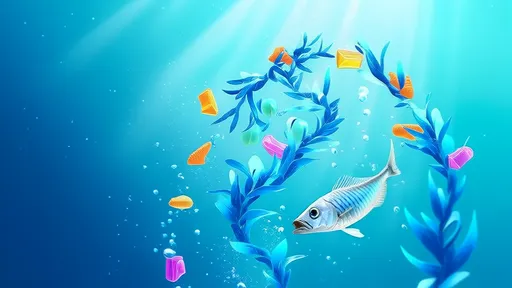
The primary entry point into the aquatic food web is through filter feeders and detritivores. Organisms like zooplankton, mussels, and lugworms indiscriminately consume these particles, mistaking them for food. Laboratory studies have consistently shown that ingestion can lead to a range of sublethal effects in these foundational species, including reduced feeding activity, impaired reproductive success, and stunted growth. While often not immediately fatal, these physiological stresses can alter population dynamics, potentially destabilizing the delicate balance of the entire ecosystem from the bottom up.
The process of trophic transfer begins here. A small fish consumes hundreds of zooplankton, each potentially containing several microplastic particles. The plastics, largely indigestible, accumulate within the fish's gut. When that small fish is subsequently eaten by a larger predator, the plastics, along with any adhered chemical contaminants, are passed upwards. This biomagnification effect means that concentration of these foreign materials can increase with each step up the trophic ladder. Top predators, including many commercially valuable fish species, marine mammals, and seabirds, can therefore accumulate the highest burdens, effectively becoming the final repositories for the plastic waste of entire ecosystems.
Beyond the physical damage caused by gut blockage and internal abrasion, the chemical threat posed by microplastics is a dual-pronged assault. First, the plastics themselves are complex cocktails of polymer resins, plasticizers, flame retardants, and stabilizers, many of which are known to be hazardous endocrine disruptors or carcinogens. These additives can leach out into the bodily fluids of an organism once ingested. Second, the porous nature of plastics acts like a sponge for hydrophobic pollutants already present in the environment, such as pesticides like DDT and industrial chemicals like PCBs. Microplastics can concentrate these toxins to levels orders of magnitude higher than in the surrounding water, creating a potent poison pill.
The journey of these contaminants does not end in the digestive tract of an animal. There is growing evidence that nanoplastics—even smaller fragments—and associated chemicals can translocate across the gut barrier into the lymphatic system and other tissues. This internal mobilization raises the specter of systemic inflammation, cellular damage, and potential generational effects if these compounds interfere with reproductive health or embryonic development. The full scope of these chronic, low-level exposures is still a major frontier in ecotoxicological research.
While much of the research has focused on marine environments, the phenomenon is by no means confined to the oceans. Terrestrial and freshwater systems are equally vulnerable. Earthworms ingesting microplastics in soil can introduce them into terrestrial food chains, affecting birds and mammals that prey upon them. Agricultural practices, such as the application of sewage sludge as fertilizer, are a significant source of plastic contamination on farmland, creating a direct pathway for these particles to enter crop systems and, eventually, the human food supply.
The human dimension of this issue brings the problem into sharp focus. We sit atop the same food chains we have contaminated. Through the consumption of seafood, sea salt, honey, drinking water, and even air, humans are consistently ingesting microplastics. The health implications of this chronic exposure are still largely unknown and are the subject of intense scientific investigation. Early concerns center on the potential for inflammatory responses, cellular toxicity, and the bioaccumulation of hazardous chemicals within our own bodies over a lifetime of exposure.
Addressing the crisis of microplastic pollution requires a multi-faceted and global response. It is a problem rooted in our reliance on and disposal of plastic materials. Solutions must range from source reduction—phasing out unnecessary single-use plastics and microbeads—to innovations in wastewater treatment to filter out fibers and fragments. Improving waste management infrastructure globally is critical to preventing plastic debris from entering ecosystems in the first place. Furthermore, continued investment in scientific research is paramount to fully understand the ecological risks and to guide effective policy and mitigation strategies.
In conclusion, the silent accumulation of microplastics through the food web is a stark reminder of the far-reaching consequences of plastic pollution. It is a vivid illustration of how human activity can disrupt natural systems in subtle yet profound ways, with potential feedback loops that ultimately impact our own well-being. Unraveling the complex ecotoxicology of these particles is not merely an academic exercise; it is an urgent necessity for informing the actions needed to safeguard the health of our planet and all its inhabitants.
By /Aug 27, 2025

By /Aug 27, 2025
By /Aug 27, 2025
By /Aug 27, 2025
By /Aug 27, 2025

By /Aug 27, 2025
By /Aug 27, 2025
By /Aug 27, 2025
By /Aug 27, 2025
By /Aug 27, 2025
By /Aug 27, 2025
By /Aug 27, 2025
By /Aug 27, 2025
By /Aug 27, 2025
By /Aug 27, 2025
By /Aug 27, 2025
By /Aug 27, 2025
By /Aug 27, 2025
By /Aug 27, 2025
By /Aug 27, 2025
